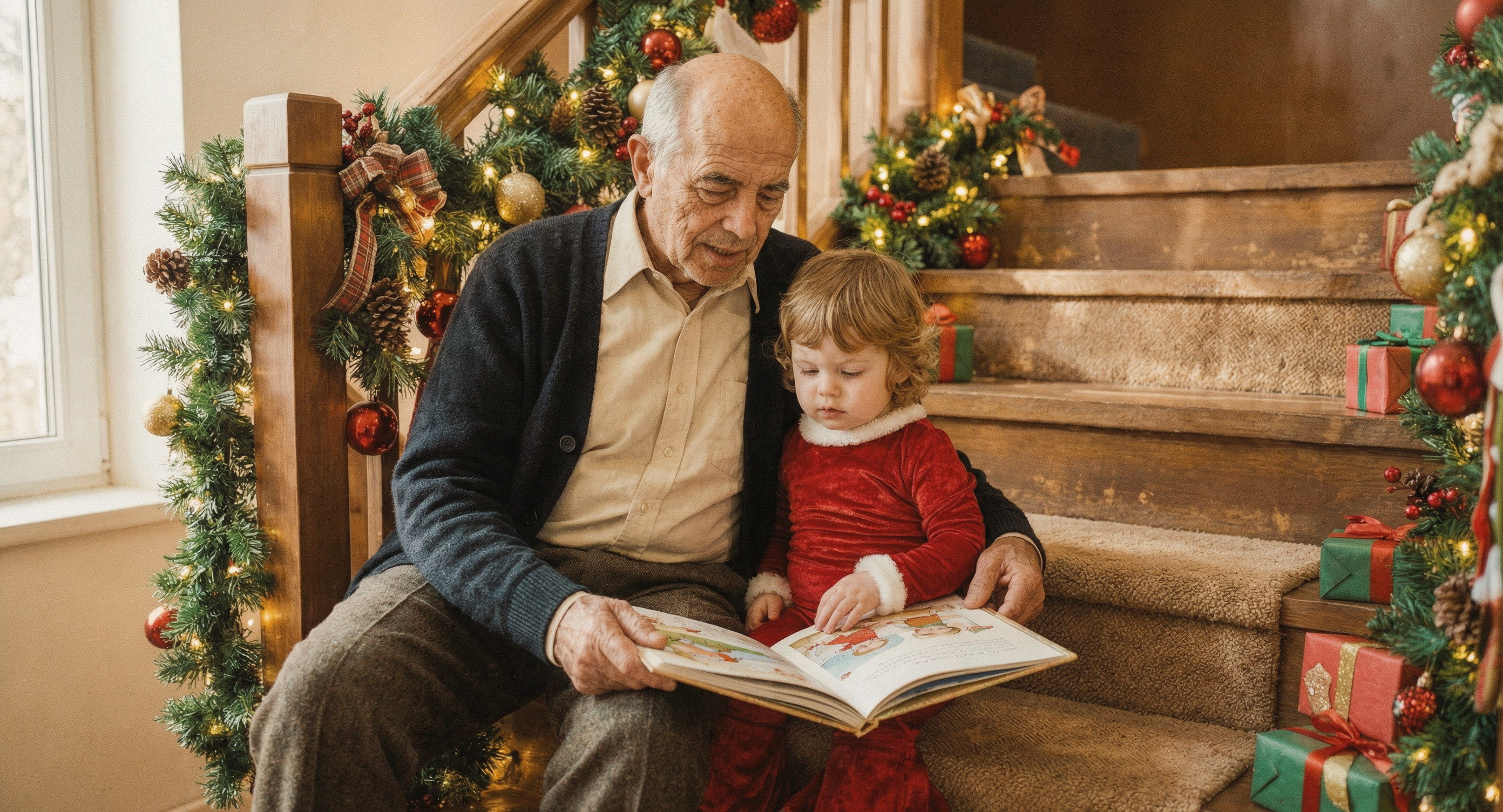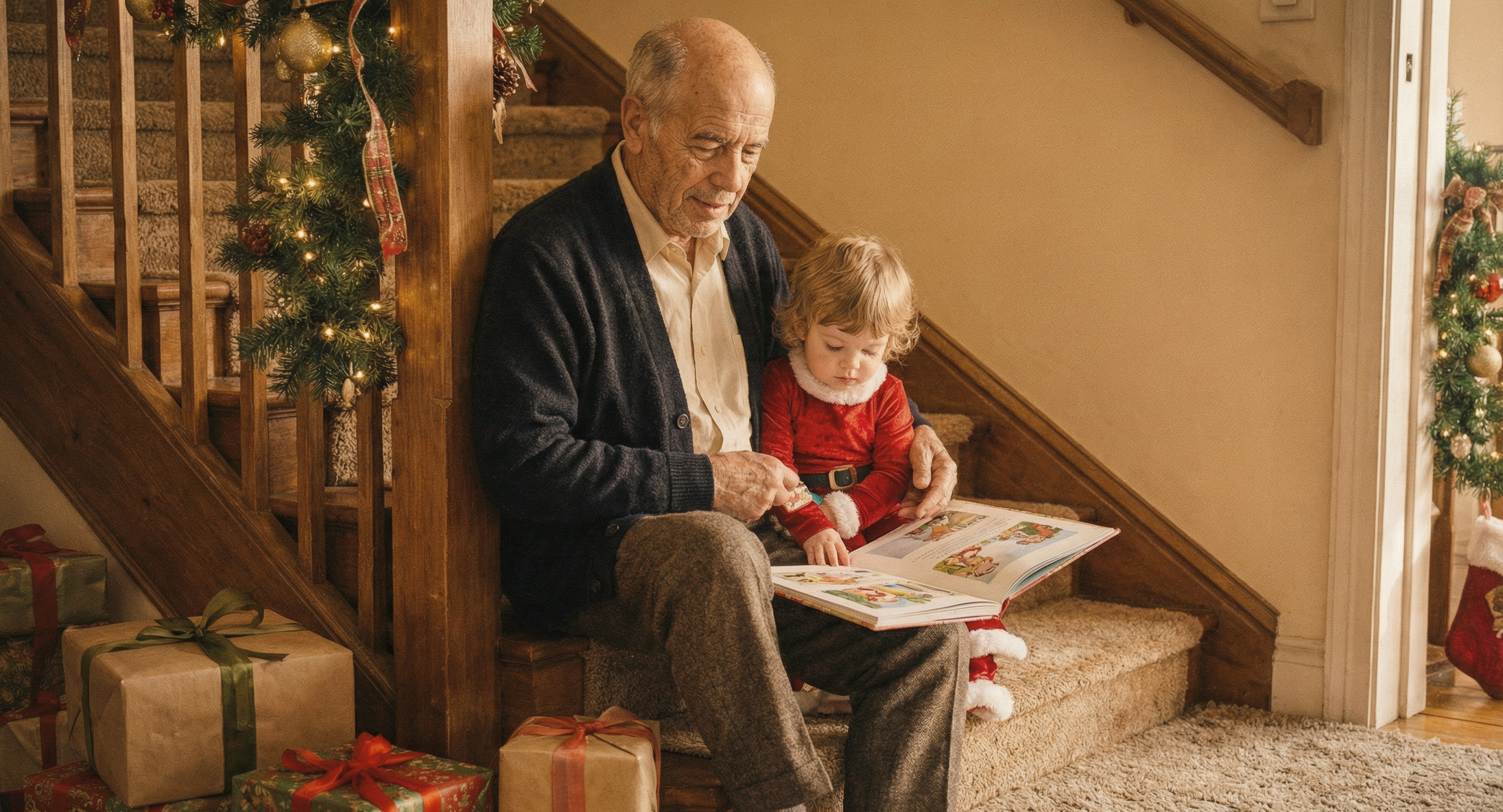
A generated photograph: an older man reading to a small child on a staircase, Christmas morning light. Faces altered for publication.

* This photograph was never taken. The moment never happened. The man it is of was real. Faces altered for publication.

On what AI is for

The memory
bridge.

Every conversation about AI is about work, or danger, or scale. Almost none of it is about this: a family keeping the face of someone who was gone too soon.

Scroll

My father passed away twenty-six years ago. My daughter is two. She will never meet him.

I had one high-quality photograph of him left. Using current AI tools, I was able to regenerate it and extend it into moments that should have existed and didn't — him holding her, walking with her, being present in her life across the years he never got to see.

What I did privately, in a workflow I built piece by piece over the last two years, is something that could be done for hundreds of millions of families. Not as a product I'm selling. As a thing that should exist.

Not as memorial AI. As something simpler. A way to close the gap that mortality leaves in a family. This is the use of this technology I keep waiting for someone to talk about, and nobody does.
What it looks like

One photograph. One evening. A man, a life, a moment that never happened.

Step 01 — Source & restoration
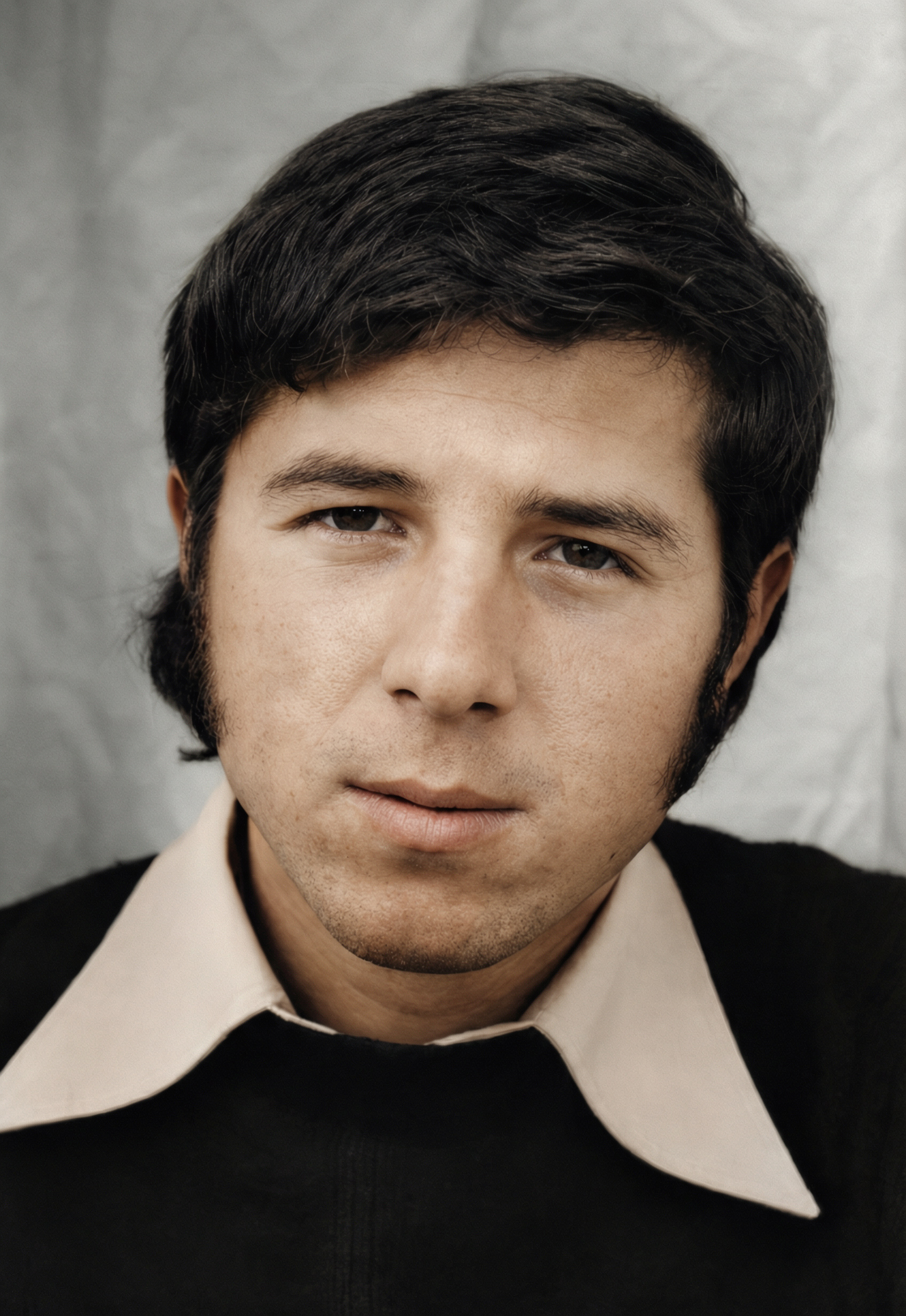
The one photograph we had. In color, for the first time.

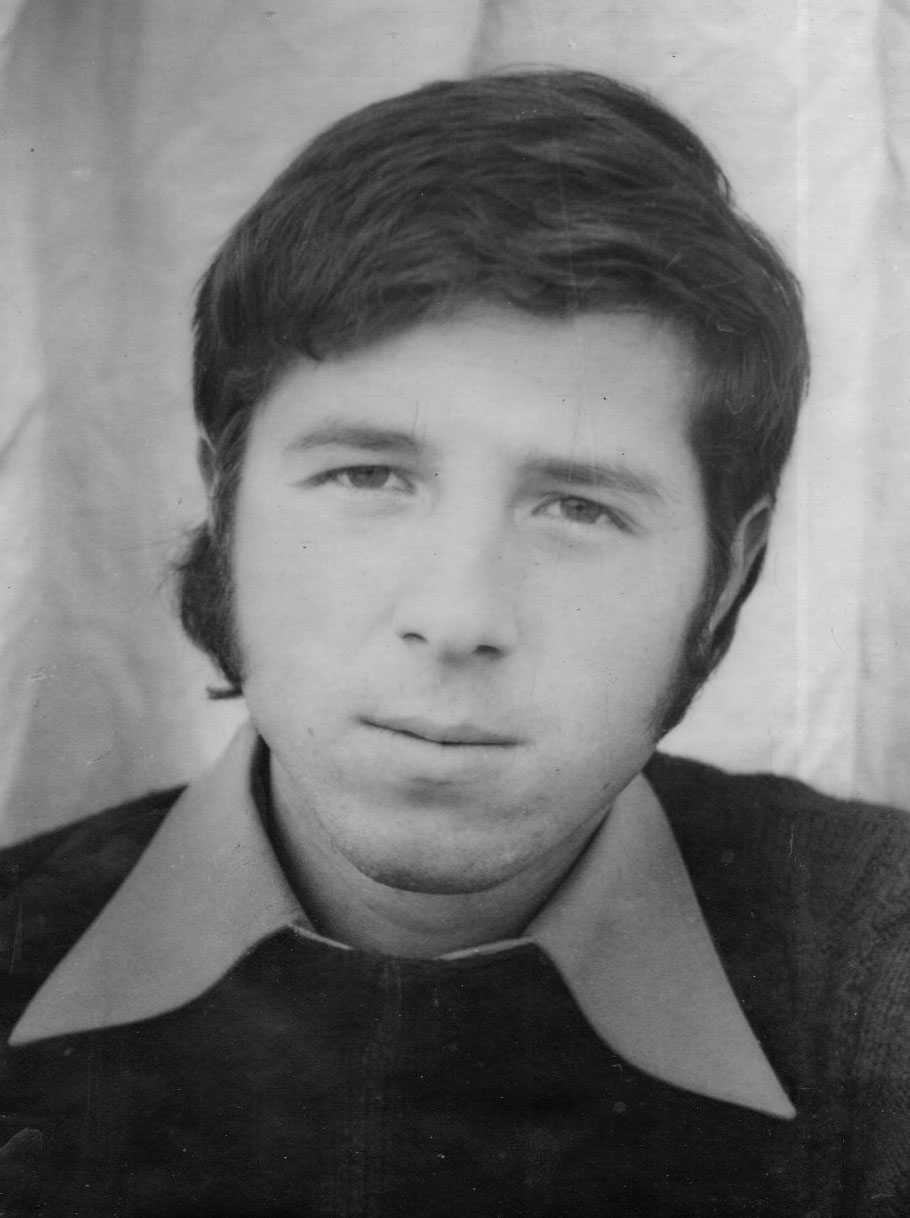
A studio portrait taken around 1973, Romania. He was twenty-two. This is the only image of him we have at any usable quality. Damage repaired, era-appropriate colorization, face preserved exactly — bone structure, eyes, the asymmetry at his mouth. The model knew this was a 1970s Eastern European portrait without me telling it.

Original · 1973
Original 1973 black-and-white studio portrait of my father at twenty-two
Restored
The same photograph restored and colorized — visible skin texture, warm tones, original character preserved
Step 02 — Across four decades
The same man. Forty years apart. The years he didn't get.

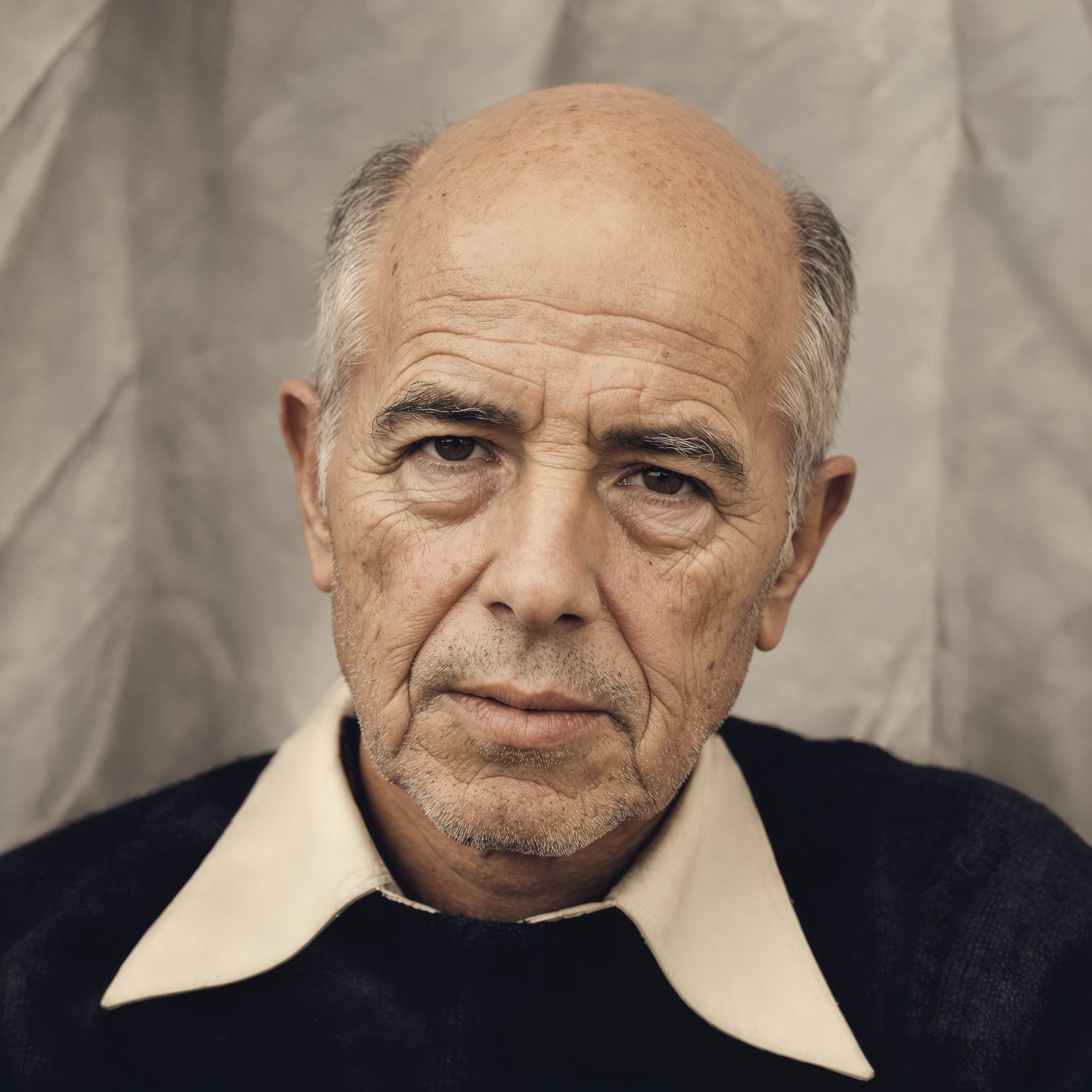
Aged forty years forward from the restored portrait. Same face, same expression, same set of the eyes — just older. The hair-loss pattern he was already starting toward. The lines you'd expect on a man who lived through Romania in the eighties and emigrated in his fifties. None of these years happened. He died at forty-three.

Restored · ~22
The restored color portrait at twenty-two
Aged · 72*
The same man aged forty years forward — grey at the temples, deep age lines, identity preserved across the transformation; face altered for publication
Step 03 — Moments that never happened
Christmas morning. A book. A grandchild he never met.

An invented photograph — but built from real references, anchored to his real face, in a real composition the model could ground. The kind of image that should exist in every family album. The kind of image that exists in almost none.

Generated moment*
Generated photograph of an older man reading to a small child on a wooden staircase, Christmas morning light — faces altered for publication

And another. And another. Different scenes, the same man.

Moment · 02*
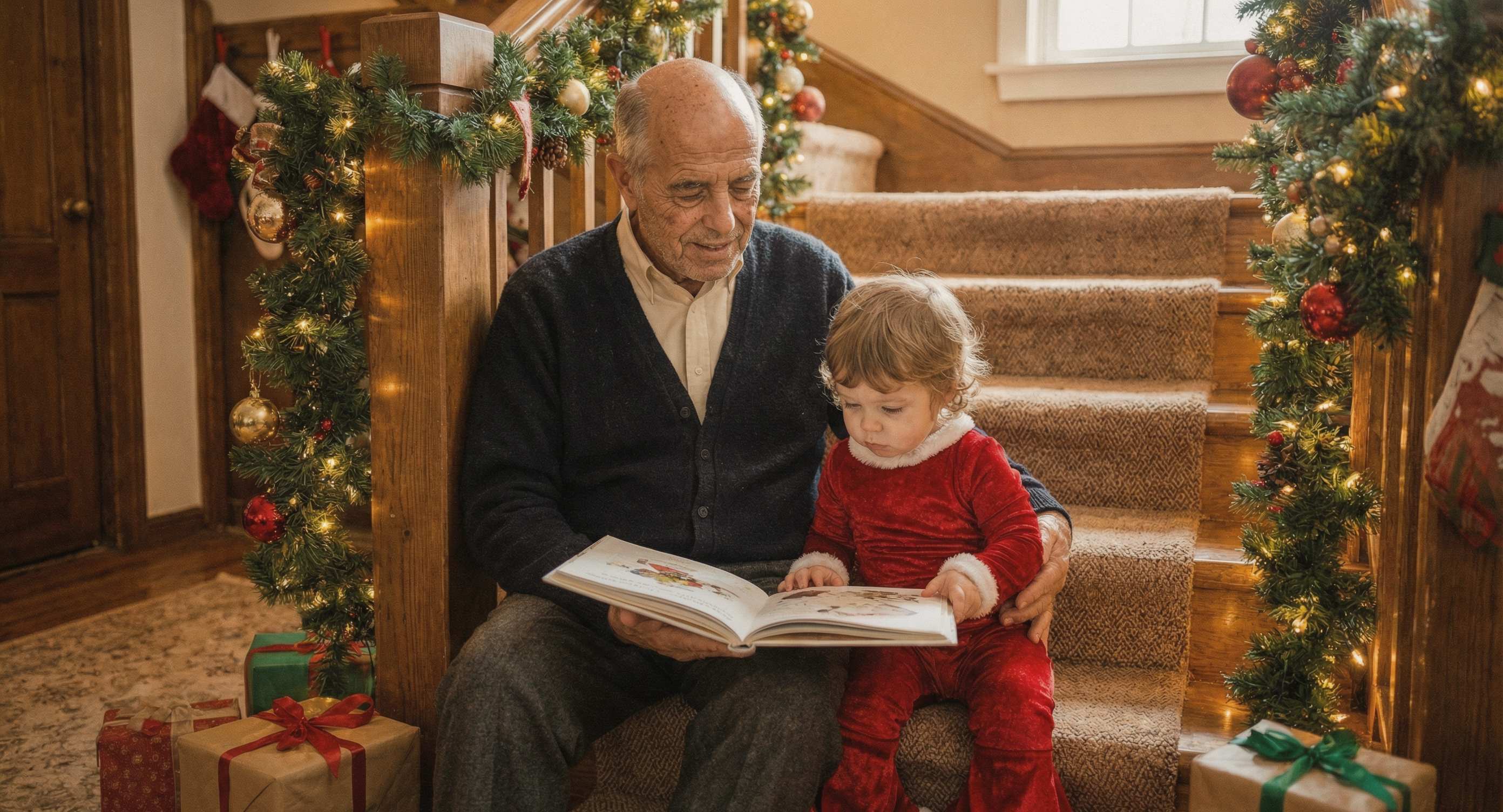
A second generated moment — face altered for publication

Caption for the second moment. Replace this when you drop the image in.

Moment · 03*
A third generated moment — face altered for publication

Caption for the third moment. Replace this when you drop the image in.

No part of these scenes was photographed. The man they are of, was real. Built in roughly four hours, using publicly available models. Three different moments, the same face across all of them. Imagine what could be built with two decades of a family's photographs behind it.

*Faces have been altered for publication. The images marked above are demonstrations of the technique, not of my family. My father's likeness and my daughter's have been changed — I'm not putting their faces on the internet to make a point about privacy. Everything shown is real in method and false in identity: the restoration, the aging, the composition and the consistency across generations are exactly as produced. The people are not. That distinction is the entire argument.

Almost everyone eventually has to describe someone to a person who will never meet them. For all of human history, the answer has been a photograph and a story. The answer can now be more than that.

Not a replacement for the person. A way to see your own face in your father's. To know what his hands looked like. To keep a visual record of where a family came from.

The audience isn't only the bereaved. It's everyone who comes after — the ones who never knew the loss, because the person was gone before they arrived.

The shape of an absence

Grief has a calendar.

Loss isn't continuous. It arrives on specific days — a birthday, an anniversary, the holiday where the chair is empty. Anyone who has lost someone knows these dates without checking. This belongs there, and nowhere else.

His birthday
"He would have been 72 today." A quiet, optional moment with him — never a notification, never a feed surface.
Family milestones
Graduations. New homes. The anniversaries he never saw. The moments he should have been there for.
Family holidays
Christmas morning. Easter. Día de los Muertos. Lunar New Year. Moments where his absence is most felt.
Lineage moments
Weddings. Reunions. The years a family marks together. The moments families gather and feel who's missing.
The death anniversary
Not a notification. A gentle availability. The family decides whether to use it.

A one-time generation is a curiosity. Something that quietly remembers your father's birthday every year for the rest of your life, and offers the family a way to keep his face present on each one, is something else. It's one of the few features that gets more meaningful as time passes.

Where this goes

Stills are the first step.

The same identity-preserving pipeline that produced the photographs above scales naturally into short-form video, then into spatial reconstruction, then into real-time presence. Each step is technically incremental from the previous. Each step runs on infrastructure the industry has been quietly building for a decade.

Today
Stills

Identity-anchored photographs. Restoration of damaged archives. Forward-aging of people who died before the camera could keep up. Composed moments that should have existed and didn't. Already working. Already shipped privately.

Next
Short-form video

A five-second clip of a man turning his head, a smile that hasn't been seen since 1998. Reference-grounded video models cleared this bar earlier this year. The work is now in the pipeline — identity preservation across frames, breath, the way a person actually moves.

Then
Real presence

A decade of work has gone into realistic human presence in virtual space — the hardware, the avatar fidelity, the spatial capture, the photo data. It has been infrastructure waiting for a use case. This is the use case. A father present in the room his grown children are sitting in, not as a chatbot of the deceased, not as a deepfake, but as the realization of what the technology has been quietly building toward.

This is the Jor-El scene. The one in every Superman film since 1978 — someone standing before the projection of a parent who died before they could be known. The cultural archetype has existed for fifty years. The technology to realize it is arriving now — and everything it requires has already been built, separately, for other reasons.

The identity models. The video models. The spatial capture research. None of it was built for this. All of it turns out to be exactly what this needs.

What it would cost

Effectively nothing.

Marginal infrastructure
$0
Inference on existing GPUs already provisioned for training and ranking.
New data collection
$0
The archive exists. The graph exists. The scaffolding exists.
Per moment generated
~$0.15
At retail with current frontier models. At platform scale: a fraction of a cent.
Reason it hasn't been built
none
Not cost. Not capability. Not data. It simply hasn't occurred to anyone to point the technology here.
Cost of keeping a face in a family
priceless.

One thing worth noticing: inference is essentially free at the margin for anyone already running models at scale. Which means the barrier was never economic. Something that needs no new infrastructure, no new data, and serves a need every family has, went unbuilt for one reason — nobody was looking in this direction.

Worth saying directly: consumer tools at this price point use older SDXL-based pipelines that don't preserve identity at the threshold this requires. The quality you saw in the photographs above comes from frontier reference-grounded models that became available recently, paired with careful prompt engineering by a frontier reasoning model. The hard part isn't cost. The hard part is the model access and the orchestration — and doing both at scale, responsibly.

The most meaningful thing this technology can do for a family costs less than a cup of coffee — and almost no one is doing it.

The privacy contract

A privacy story that's actually true.

This is built for adults, about adults. No new photographs of anyone living are required, and none of a minor are ever used.

The contract

Ephemeral input. Family-controlled output. No new collection.

The system draws only on photographs already in the family's own archive, and only of the adult who has died. Any reference used for a single generation is destroyed immediately after. Not stored. Not indexed. Not used for training. Not used for ads. Not retained in any form. No minors are depicted, referenced, or generated. Only an adult family member can request a moment, and the output belongs to the family.

This is a privacy posture that can be written into policy, externally audited, and verified. The restraint is the product: what it refuses to do is what makes it trustworthy enough to exist.

How many people this is

This is not a niche.

Grief is the most universal human experience there is, and the least served by any technology built in the last twenty years. The numbers are here for anyone who needs them.

Who this would reach +
60–70%Western adults who will have lost a parent by age 50. Lifetime exposure to significant bereavement is universal.
150–300MConservative estimate of families globally with a multi-year photo archive and a parent or grandparent who has died.
Every yearThe number of families entering this experience for the first time does not decline. It is the one need that never shrinks.
What the comparable market proves +
$3–$2,800Chinese AI-memorial market price range — from basic photo animation to "digital immortality" tablets (MIT Tech Review, AFP, SCMP).
600–1,000Family clients reported by Super Brain alone by 2024 — built with almost none of the source material a normal family already has.
Multiple ordersPeople are already paying for a far worse version of this. The demand is not in question — only whether anyone builds it carefully.
On the technology

The right tools exist now. Reference-grounded models that preserve identity across image and short-form video — at quality levels that make this feasible at scale — became available very recently.

The strongest of these is currently produced by a company still small enough that a partnership would have meaningful technical leverage. I can walk through the architecture, the pipeline choices, and the production failure modes in a direct conversation. I'd rather not name names in writing while there's still a window.

The working version

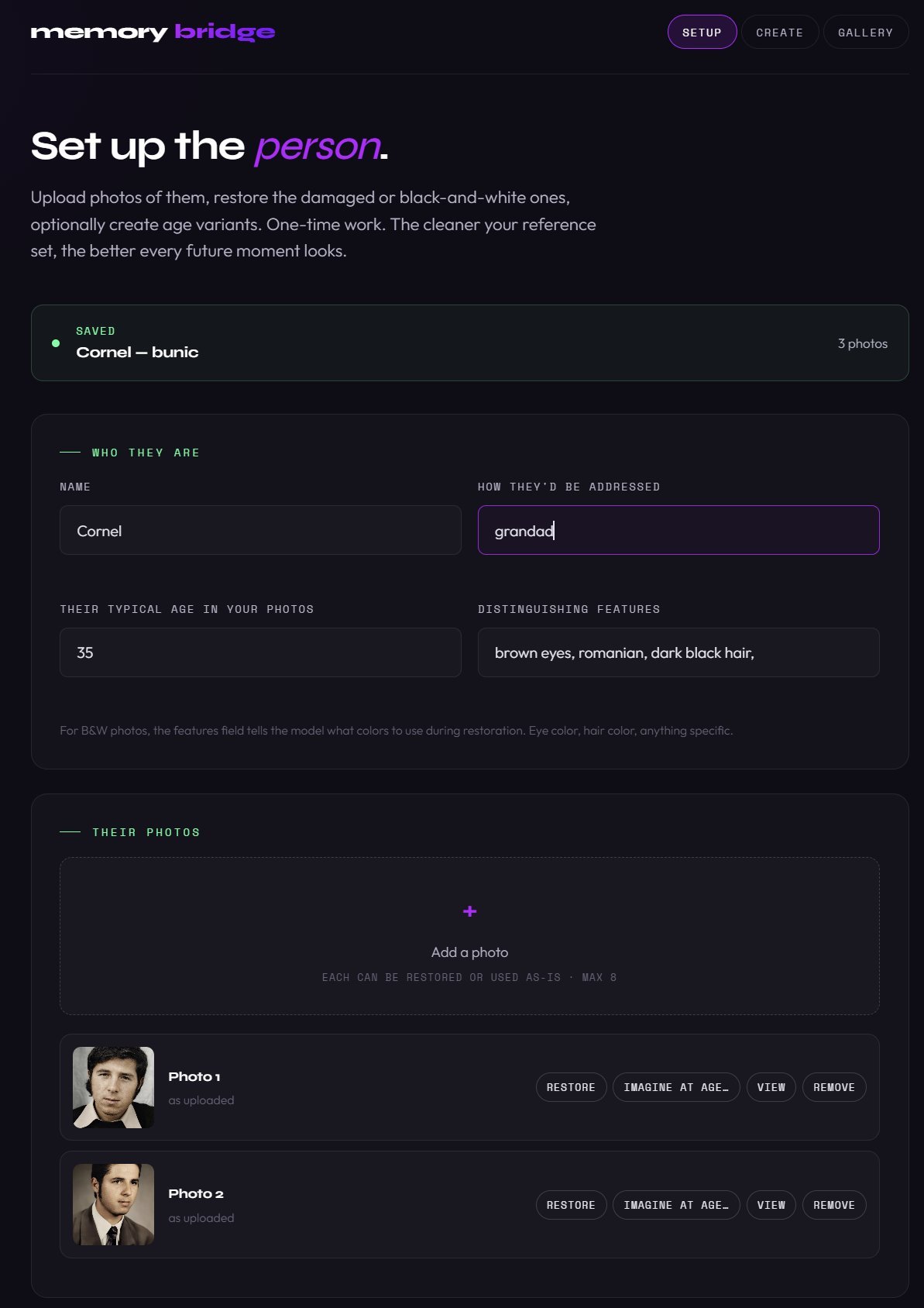
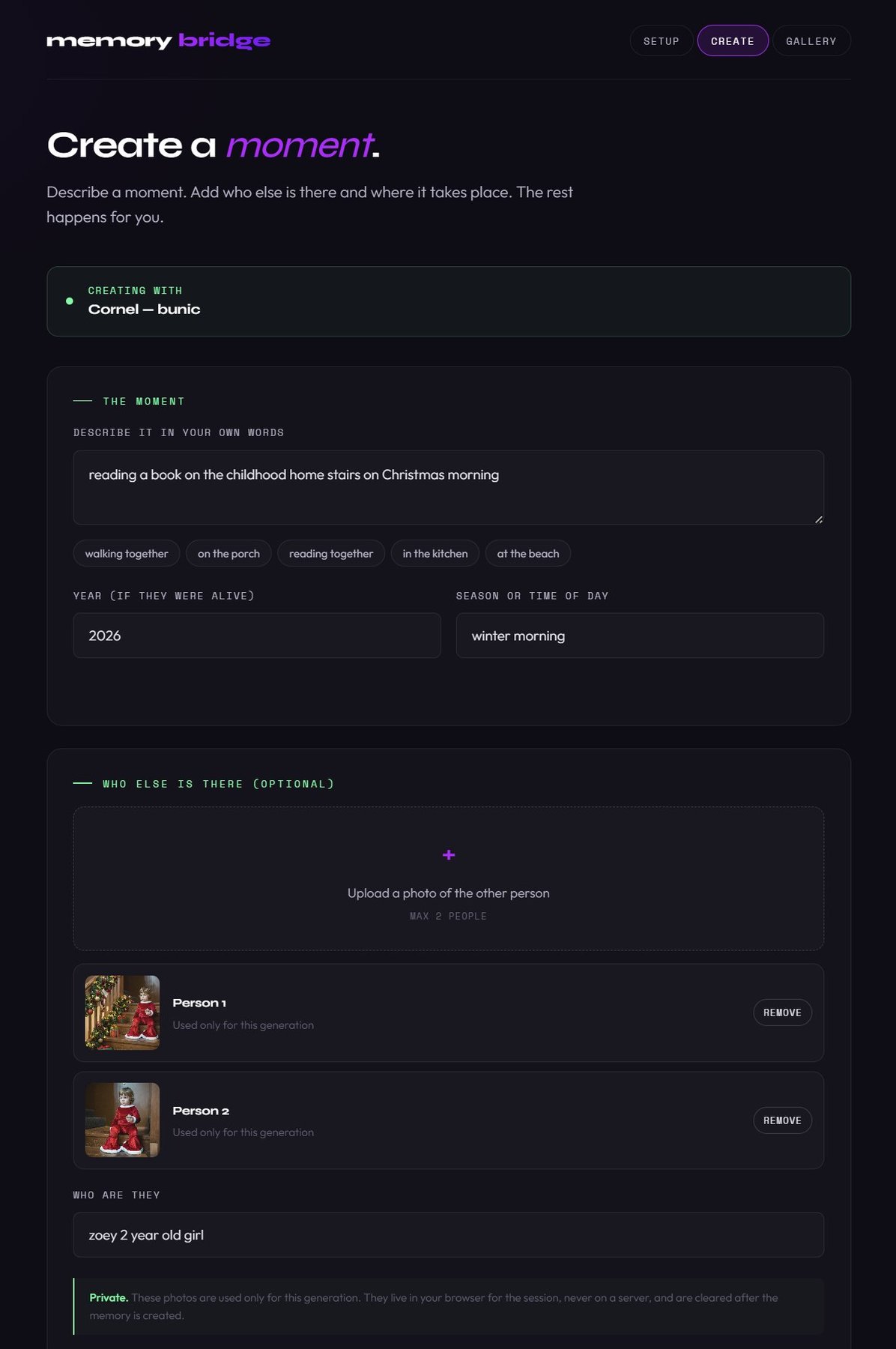
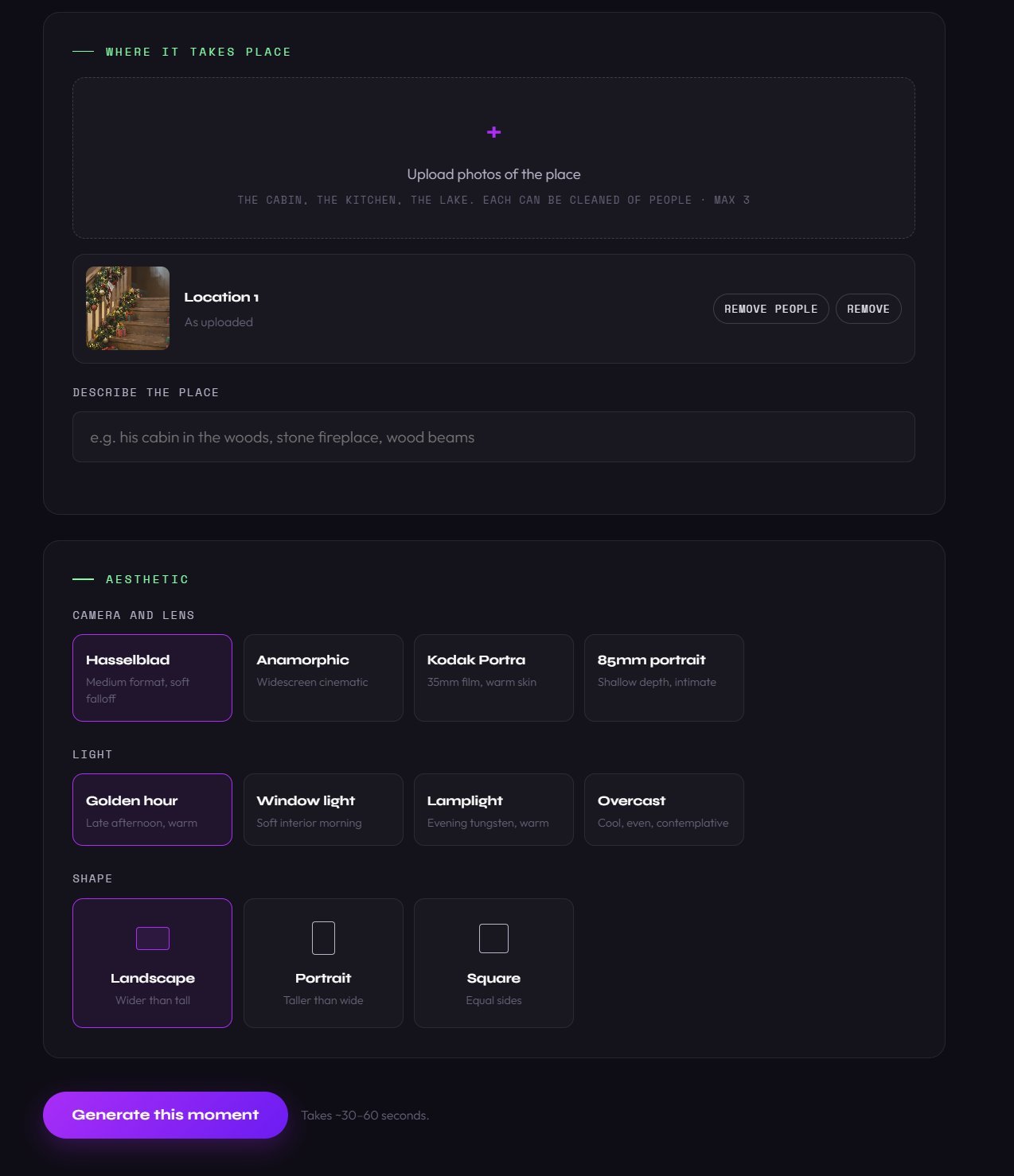
Rather than describe what this could be, I built it. A small private prototype that takes the same approach outlined above: a one-time character setup with photo restoration and age variants, environment grounding from real places that mattered, and a single sentence of natural language to compose each moment.

The prompt engineering is hidden. The cinematography vocabulary is hidden. The user describes the moment in their own words. The system handles the rest.

Memory Bridge Setup tab — defining the person, their typical age, distinguishing features for accurate colorization, and a set of reference photos with Restore and Imagine-at-age actions
Setup Define the person once. Restore the photos. Imagine them at any age.
Memory Bridge Create tab — describing a moment in one sentence, adding optional second person, year and season, with privacy guardrails for the optional uploaded reference photos
Create Describe a moment in one sentence. Add who else is there. The system handles the rest.
Memory Bridge aesthetic controls — camera vocabulary including Hasselblad, Anamorphic, Kodak Portra, 85mm portrait, with light direction and aspect ratio selectors
Aesthetic Cinematography as vocabulary. Hasselblad, Kodak Portra, golden hour. The prompt engineering is hidden.
Coming soon The working version runs end-to-end — restoration, age variants, environment grounding, and moment generation. The public link is held back for now while the right conversations happen. Available on request.
Why I made this

The technology is solved. The data exists. The compute is paid for. What's left is for someone to decide that this is worth building — and to build the careful version.

I'm not selling anything. I built this for my own family first, and then realized how strange it was that in three years of relentless conversation about what AI is for, I had never once heard anyone suggest it was for this.

If anyone wants to talk through how it works — the model choice, the pipeline, the failure modes I've already hit — I'll make the time.

And if not: this is still a good idea, and I'd rather it exist somewhere than nowhere. Not every use of this technology has to make someone money to be worth making.

Ioan Popa
Principal Product Designer · Award-winning astrophotographer and designer
Father, son, and someone who built this for his own family first.